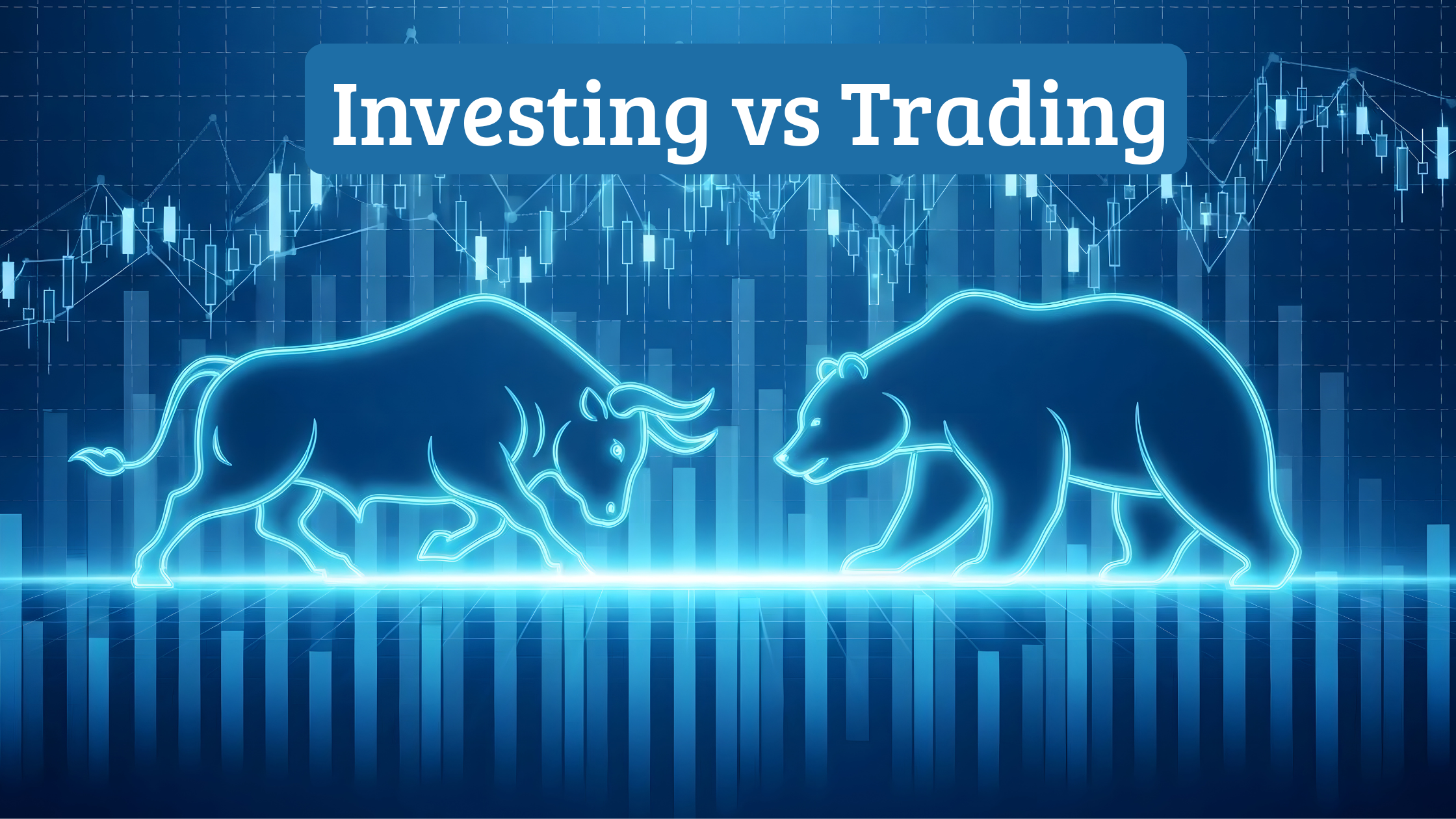
Financial markets offer many opportunities for people to grow their wealth. Two of the most common approaches used in the stock market are investing and trading. Although many people use these terms interchangeably, they represent very different strategies with unique goals, time frames, and risk levels.
Understanding the difference between investing and trading is important for anyone who wants to build wealth through the financial markets. Choosing the right strategy can help you manage risk better, make informed decisions, and achieve your financial goals.
In this article, we will explore the key differences between investing and trading, how each strategy works, and which approach might be suitable for different types of investors.
What is Investing?
Investing refers to the process of buying financial assets and holding them for a long period of time in order to generate wealth gradually. Investors typically focus on long-term growth and believe that the value of good companies will increase over time.
Investors usually buy assets such as stocks, mutual funds, bonds, or exchange-traded funds (ETFs) and hold them for several years or even decades.
The primary goal of investing is long-term capital appreciation and steady returns.
Key Characteristics of Investing
1. Long-Term Approach
Investing focuses on long-term growth. Investors often hold their assets for years to benefit from market growth and compounding returns.
2. Fundamental Analysis
Investors usually analyze a company’s financial health, business model, earnings, and growth potential before investing.
3. Lower Frequency of Transactions
Investors do not buy and sell frequently. Once they choose strong companies or funds, they hold them for the long term.
4. Lower Stress and Monitoring
Investing requires less daily monitoring compared to trading because long-term investors are not concerned with short-term price fluctuations.
What is Trading?
Trading is the process of buying and selling financial instruments frequently to profit from short-term price movements. Traders aim to take advantage of market volatility and earn profits within a short time frame.
Unlike investors, traders may hold assets for minutes, hours, days, or weeks rather than years.
Trading is often more active and requires constant market analysis and quick decision-making.
Key Characteristics of Trading
1. Short-Term Strategy
Trading focuses on short-term price changes rather than long-term company growth.
2. Technical Analysis
Traders rely heavily on price charts, technical indicators, patterns, and market trends to make decisions.
3. Frequent Buying and Selling
Traders may execute multiple trades within a single day or week.
4. Higher Risk and Higher Potential Reward
Since trading involves short-term speculation, it often carries higher risk but can also generate quick profits if done correctly.
Types of Trading
There are several types of trading strategies used in financial markets:
1. Day Trading
Day traders buy and sell assets within the same trading day. They close all positions before the market closes.
2. Swing Trading
Swing traders hold assets for several days or weeks to capture short-term price movements.
3. Scalping
Scalping involves making many small trades within a very short period to earn small profits repeatedly.
4. Position Trading
Position trading is a longer-term trading strategy where traders hold assets for months based on market trends.
Key Differences Between Investing and Trading
Understanding the core differences can help you choose the approach that suits your financial goals.
1. Time Horizon
The main distinction between investing and trading lies in the length of time the assets are held.
Investing focuses on long-term wealth creation, often over many years.
Trading focuses on short-term profit opportunities, sometimes within minutes or hours.
2. Strategy
Investors rely on fundamental analysis, studying company earnings, management quality, industry growth, and financial statements.
Traders mainly use technical analysis, including charts, patterns, indicators, and price momentum.
3. Risk Level
Investing generally involves lower risk because long-term investors can ride out market volatility.
Trading carries higher risk because short-term price movements can be unpredictable.
4. Effort and Time Required
Investing requires less daily involvement. Investors typically review their portfolios periodically.
Trading requires constant monitoring of markets, charts, and news events.
5. Transaction Costs
Trading often involves more transaction fees because of frequent buying and selling.
Investing usually has lower transaction costs due to fewer trades.
6. Profit Expectations
Investors expect steady long-term growth.
Traders aim for quick profits from market fluctuations.
Advantages of Investing
Investing offers several benefits, especially for people who want to build long-term wealth.
Wealth Creation Over Time
Long-term investing allows money to grow through compounding.
Lower Stress
Investors do not need to track market movements every minute.
Lower Transaction Costs
Since investors trade less frequently, they incur fewer brokerage fees.
Better for Retirement Planning
Investing is often used for long-term goals such as retirement, education, or wealth building.
Advantages of Trading
Trading can also offer certain benefits for experienced market participants.
Potential for Quick Profits
Traders can earn profits within short periods if market conditions are favorable.
Flexibility
Trading strategies can adapt to different market conditions.
Opportunity in Volatile Markets
Even when markets are not trending upward, traders may still find opportunities in price movements.
Risks of Investing and Trading
Both investing and trading involve risks.
Risks in Investing
- Market downturns can reduce portfolio value temporarily
- Poor investment decisions may lead to losses
- Economic changes may impact long-term growth
Risks in Trading
- High market volatility
- Emotional decision-making
- Overtrading and excessive risk-taking
- Significant financial losses in a short time
Understanding these risks is essential before entering the financial markets.
Which Strategy is Better?
There is no single answer to whether investing or trading is better. The best strategy depends on your financial goals, risk tolerance, knowledge, and available time.
Investing is generally suitable for:
- Long-term wealth building
- Retirement planning
- People with limited time to monitor markets
- Individuals seeking steady growth
Trading may be suitable for:
- Experienced market participants
- People who can dedicate time to market analysis
- Individuals comfortable with higher risk
- Those looking for short-term profit opportunities
Some people even combine both strategies by investing for the long term while allocating a small portion of their capital for trading.
Final Thoughts
Investing and trading are two different approaches to participating in financial markets. While investing focuses on long-term growth and financial stability, trading focuses on short-term opportunities and active market participation.
For beginners, investing is often considered a safer and more sustainable strategy for building wealth over time. Trading, on the other hand, requires experience, discipline, and a deep understanding of market behavior.
Before choosing any strategy, it is important to evaluate your financial goals, risk tolerance, and level of market knowledge. With the right approach and proper financial planning, both investing and trading can play a role in helping individuals achieve their financial objectives.