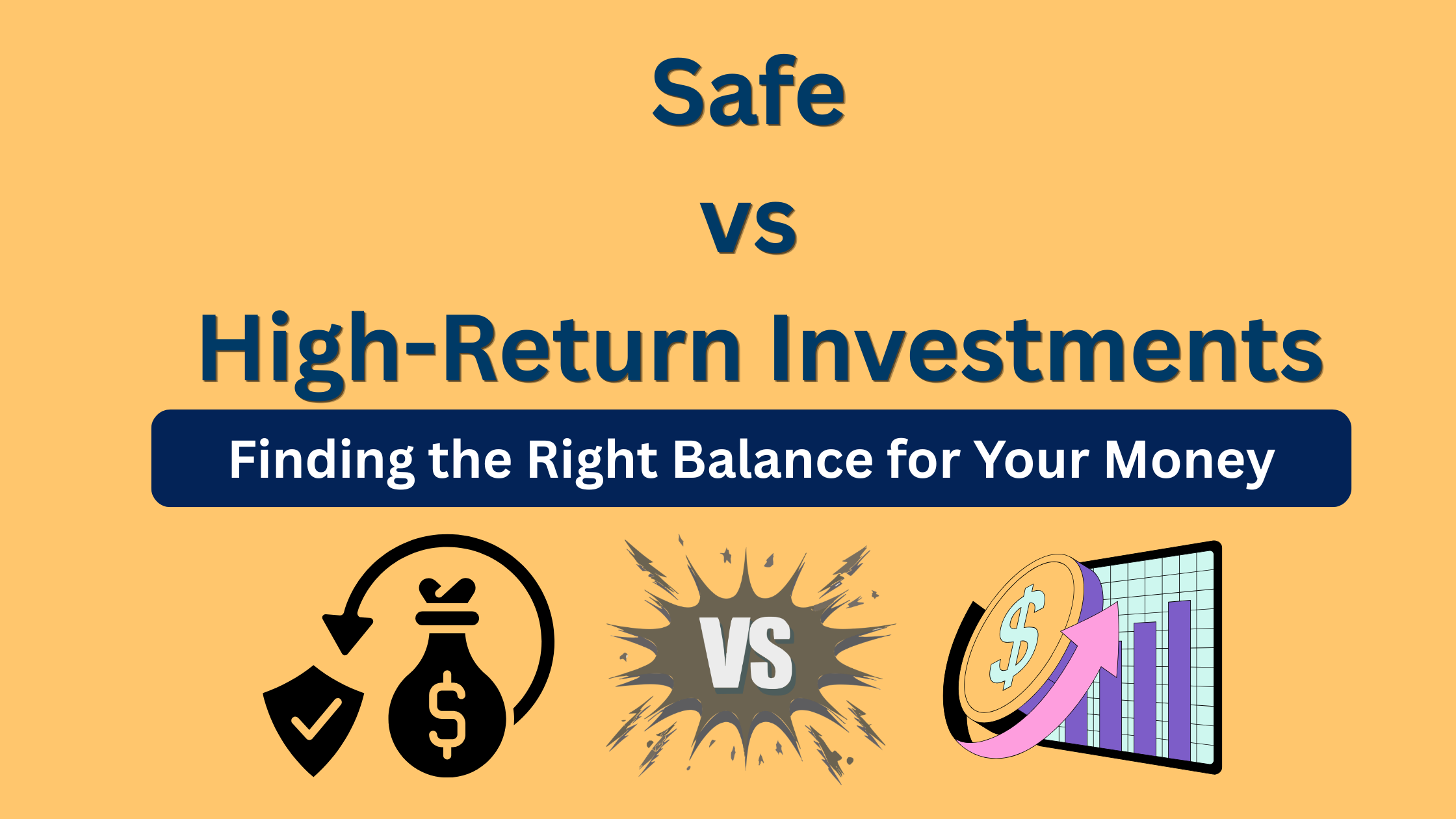
Investing is one of the most effective ways to grow wealth and achieve long-term financial goals. However, every investor faces an important decision before investing: should you choose safe investments that offer stability, or high-return investments that come with higher risk? Understanding the difference between these two options is essential for building a balanced financial strategy. This article explores safe investments, high-return investments, and how to choose the right option based on your financial goals.
Understanding Safe Investments
Safe investments are financial instruments designed to protect your capital while providing steady but moderate returns. These investments are generally considered low risk because the chances of losing money are minimal. They are ideal for individuals who prioritize security and stability over aggressive growth.
One of the main advantages of safe investments is predictability. Investors usually know the expected returns beforehand, which makes financial planning easier. Additionally, these investments are less affected by market fluctuations.
Common examples of safe investments include government bonds, fixed deposits, savings accounts, and certain retirement plans. Many people nearing retirement or those with short-term financial goals prefer safe investments because they protect their principal amount.
However, safe investments also have a limitation: the returns are relatively lower. Over time, inflation may reduce the real value of the earnings, which means your money may not grow significantly compared to more aggressive investments.
Understanding High-Return Investments
High-return investments are designed to generate greater profits, but they come with higher risk. These investments are often linked to market performance and can experience significant price fluctuations.
Investors who choose high-return investments are usually willing to accept short-term volatility in exchange for the potential of higher long-term gains. Examples of high-return investments include stocks, mutual funds, real estate, and certain market-linked investment products.
One of the biggest advantages of high-return investments is wealth creation. Over time, these investments have the potential to grow much faster than low-risk options. For example, stock market investments historically provide higher returns over long periods.
However, the downside is risk. Market downturns, economic instability, or poor investment choices can lead to losses. Therefore, high-return investments require research, patience, and a long-term perspective.
Key Differences Between Safe and High-Return Investments
Understanding the differences between these two investment types can help investors make smarter decisions.
1. Risk Level
Safe investments carry low risk and focus on protecting capital. High-return investments involve higher risk and may experience price volatility.
2. Potential Returns
Safe investments provide modest but steady returns. High-return investments offer the potential for significantly larger gains.
3. Investment Horizon
Safe investments are suitable for short-term goals or capital preservation. High-return investments usually require a longer investment horizon to manage market fluctuations.
4. Liquidity and Flexibility
Some safe investments provide quick access to funds, while certain high-return investments may require longer holding periods to realize gains.
5. Investor Profile
Conservative investors generally prefer safe investments, while aggressive investors may seek high-return opportunities.
Factors to Consider Before Choosing an Investment
Selecting the right investment strategy depends on several personal and financial factors. Before deciding, investors should evaluate the following aspects:
1. Financial Goals
Your investment choice should align with your financial objectives. If you are saving for a short-term goal such as an emergency fund, safe investments may be the best option. For long-term goals like retirement or wealth creation, high-return investments can be more suitable.
2. Risk Tolerance
Every investor has a different level of comfort with risk. Some individuals prefer stability and peace of mind, while others are comfortable taking calculated risks for higher returns.
3. Investment Time Frame
Time plays a crucial role in investment decisions. Long-term investors can often handle market volatility better, which makes high-return investments more practical. Short-term investors usually prioritize capital protection.
4. Diversification
A smart investment plan usually combines stable, low-risk investments with options that offer higher potential returns. This balanced approach helps protect your money while also giving you opportunities for better growth over time.
Why a Balanced Investment Strategy Is Important
Instead of choosing only safe or only high-return investments, many financial experts recommend a balanced approach. Combining different types of investments allows you to reduce risk while still pursuing growth.
For example, a portion of your portfolio can be allocated to stable investments such as fixed deposits or bonds to ensure financial security. The remaining portion can be invested in growth-oriented assets like stocks or mutual funds to increase wealth over time.
This strategy is commonly known as portfolio diversification and is widely used by successful investors. Diversification helps protect your portfolio from sudden market downturns while maintaining the potential for higher returns.
When to Choose Safe Investments
Safe investments are often suitable in the following situations:
- When you want to protect your capital
- When you have short-term financial goals
- When you are close to retirement
- When you prefer stable and predictable income
In these cases, the priority is financial stability rather than rapid wealth growth.
When to Choose High-Return Investments
High-return investments may be more appropriate when:
- You have long-term financial goals
- You can tolerate market fluctuations
- You want to build wealth over time
- You have already established an emergency fund
Investors who start early and stay invested for the long term often benefit the most from high-growth investment opportunities.
Final Thoughts
Choosing between safe and high-return investments is not about selecting one over the other. The right decision depends on your financial goals, risk tolerance, and investment horizon. Safe investments provide stability and security, while high-return investments offer the potential for greater wealth creation.
A well-planned investment strategy often includes a mix of both options. By balancing safety and growth, investors can build a portfolio that protects their finances while also allowing their money to grow over time.
Before making any investment decision, it is always wise to assess your financial situation carefully and consider seeking professional financial advice if needed. With the right strategy, investing can become a powerful tool for achieving long-term financial success.